For many travelers, a holiday to our island is about more than just golden beaches and wildlife; it is a journey into a deeply spiritual and ancient past. If you are fascinated by history, architecture, and the incredible achievements of early civilizations, then the Sri Lanka cultural triangle will be the absolute highlight of your trip.
This remarkable region, situated in the dry central plains of the country, is home to a staggering concentration of UNESCO World Heritage Sites. From royal palaces built on top of sheer rock columns to massive, domed stupas that rivaled the Egyptian pyramids in size, the ruins here tell the story of a civilization that flourished for over two thousand years.
Because there is so much to see, exploring this area can feel a bit overwhelming for a first-time visitor. In this guide, we will break down the must-visit ancient cities, offer practical advice on how to navigate the heat, and show you the best way to experience these historical wonders.
What is the Sri Lanka Cultural Triangle?
Geographically, the Cultural Triangle is defined by three historic points: the ancient northern kingdom of Anuradhapura, the eastern medieval capital of Polonnaruwa, and the southern hill capital of Kandy. Within the borders of this triangle lies the historic heartland of Sri Lanka, filled with thousands of ancient monuments, beautifully preserved monasteries, and complex ancient irrigation reservoirs that still function today.
While Kandy offers a wonderful glimpse into the island’s more recent royal history, most of the deep archaeological exploration happens in the northern section of the triangle. To get the most out of your visit, you need a solid plan. Let’s look at the unmissable highlights.
Sigiriya Rock Fortress: The Palace in the Sky
If you only have time to visit one historical site during your entire holiday, it has to be the Sigiriya rock fortress. Rising nearly 200 meters out of the surrounding green jungle, this massive granite monolith is breathtaking to witness.
In the 5th century, King Kasyapa decided to build his royal palace right on the flat summit of this sheer rock. Today, you can climb the metal staircases bolted to the side of the cliff to reach the top. Along the way, you will pass the famous Sigiriya Frescoes—vividly painted ancient portraits of celestial maidens—and walk through the giant, carved lion’s paws that guard the final ascent.
Once you reach the top, the panoramic view of the surrounding plains is spectacular. The climb involves around 1,200 steps and can take about an hour depending on your fitness level. Because the rock is completely exposed to the sun, it is highly recommended to start your climb at 7:00 AM as soon as the gates open, before the midday heat and the crowds arrive.
Dambulla Cave Temple: Ancient Art and Devotion
Located just a short drive from Sigiriya, the Dambulla cave temple is the largest and best-preserved cave temple complex in Sri Lanka. Dating back to the 1st century BCE, these caves provided refuge for a king who was driven from his throne in Anuradhapura. When he regained his kingdom, he converted the caves into a magnificent Buddhist monastery.
There are five main caves to explore, built directly under a massive rock overhang. Inside, the cool, dark caves are completely filled with over 150 life-sized statues of the Buddha, ancient kings, and various deities. The ceilings and walls are entirely covered in intricate, colorful murals depicting the life of the Buddha.
The contrast between the bright, hot sun outside and the serene, vividly painted caves inside is a very moving experience. Remember that this is an active place of worship, so you must have your shoulders and knees covered, and you will need to leave your shoes at the entrance.
Polonnaruwa Ancient City: Cycling Through History
After Anuradhapura fell to invaders, the capital was moved to Polonnaruwa in the 11th century. Because it is a “newer” ancient city, the ruins here are incredibly well-preserved. Polonnaruwa ancient city is much more compact than Anuradhapura, making it feel like a massive open-air museum.
The absolute best way to explore this site is by renting a bicycle. You can leisurely pedal along the shaded, flat dirt paths connecting the royal palace ruins, the ancient council chambers, and the beautiful circular relic house known as the Vatadage.
The undisputed highlight of Polonnaruwa is the Gal Vihara. This is a collection of four massive Buddha statues—one sitting, one standing, and one reclining—all masterfully carved from a single, continuous face of granite rock. The level of detail achieved by the ancient stone masons is truly awe-inspiring.
Anuradhapura: The First Great Capital
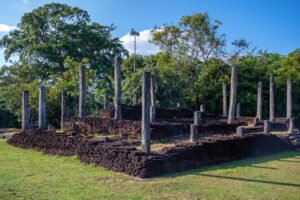
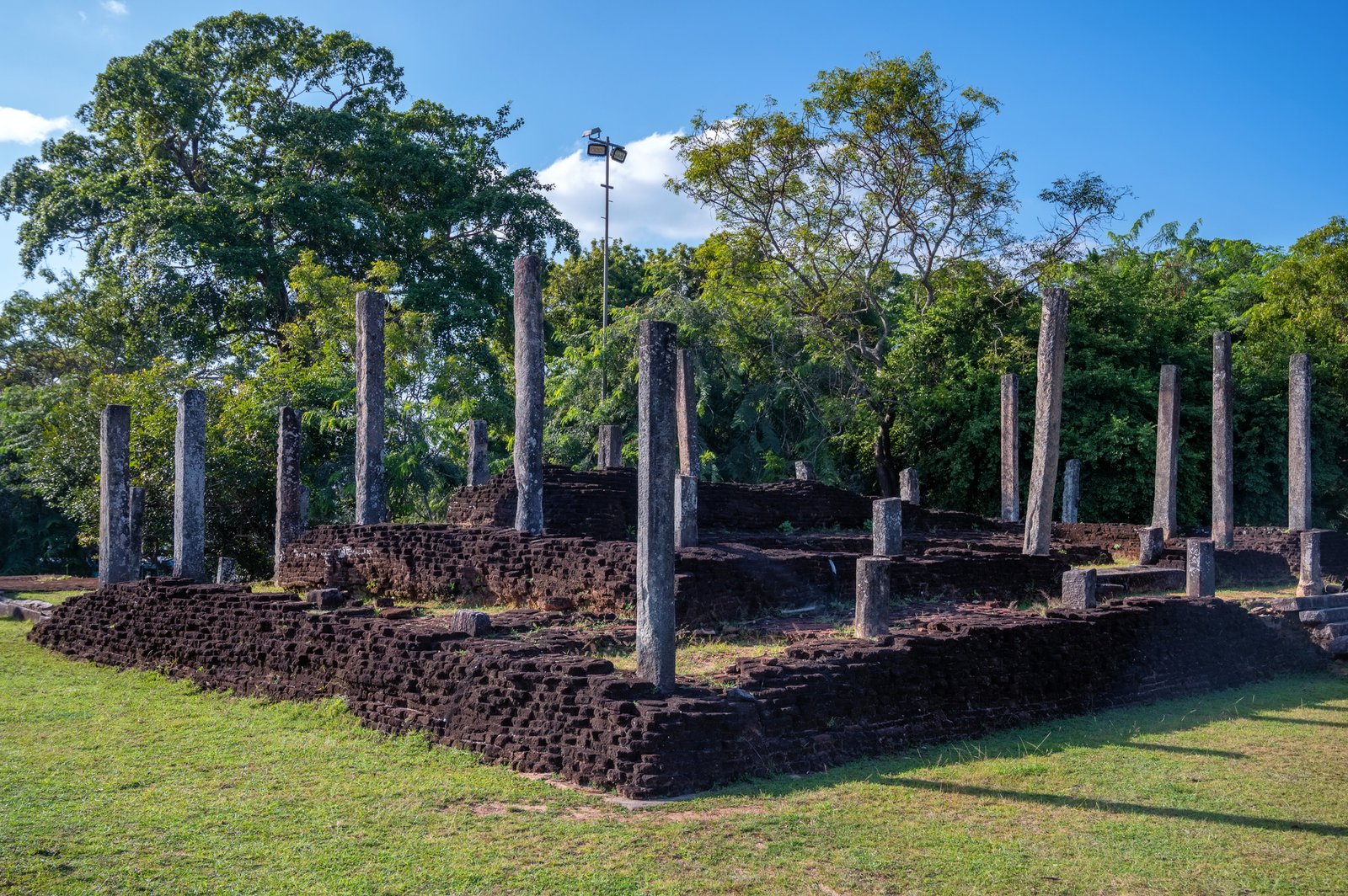
Anuradhapura was the island’s very first great capital and served as the center of power for over a millennium. This site is massive, sprawling across a wide area dotted with ancient monastic complexes, towering stupas (dome-shaped shrines), and sacred ruins.
The two most important sites here are the Ruwanwelisaya Stupa, a blindingly white dome that rises above the tree line, and the Jaya Sri Maha Bodhi. The Bodhi tree is a sacred fig tree grown from a branch of the exact tree under which the Buddha attained enlightenment in India. It is the oldest historically authenticated tree in the world, and witnessing the deep devotion of the pilgrims who travel here to pray is a beautiful cultural experience.
Because Anuradhapura is so spread out, trying to walk between the monuments in the tropical heat is exhausting. Having a car and driver to take you between the major clusters of ruins makes the visit much more enjoyable.
How to Travel and Where to Stay
The biggest mistake travelers make when visiting the Cultural Triangle is constantly moving hotels. Instead of unpacking every single night, the smartest approach is to choose a central base. The small towns of Habarana or Sigiriya are perfectly located right in the middle of the triangle.
If you stay in a lovely jungle hotel in Habarana for three nights, you can easily do a morning day-trip to Polonnaruwa, climb Sigiriya the next day, and still have time for an afternoon elephant safari in the nearby Minneriya National Park. It keeps your travel times low and gives you time to relax by the pool in the hot afternoons.
Elevate Your Sri Lanka Heritage Tours
Exploring these ancient cities independently can be a bit of a challenge. Coordinating local buses between distant ruins, figuring out where to buy entrance tickets, and trying to understand the deep historical context from a guidebook while sweating in the midday sun can turn an amazing historical site into a stressful chore.
When you book your Sri Lanka heritage tours with Paradise Ceylon Tours, you get to experience the magic of the Cultural Triangle without any of the logistical friction. Your private, air-conditioned vehicle is a welcome oasis after a morning of walking through ruins.
More importantly, our knowledgeable chauffeur-guides bring these ancient stones to life. Instead of just looking at an old brick wall, your guide will explain how the brilliant ancient irrigation systems worked, share the fascinating stories of the kings who built the temples, and make sure you visit the busiest sites at the perfect time of day to avoid the crowds. Let us handle the map, the driving, and the tickets, so you can simply step back in time and enjoy the journey.